

Behind the Mural: Ornamental Fox
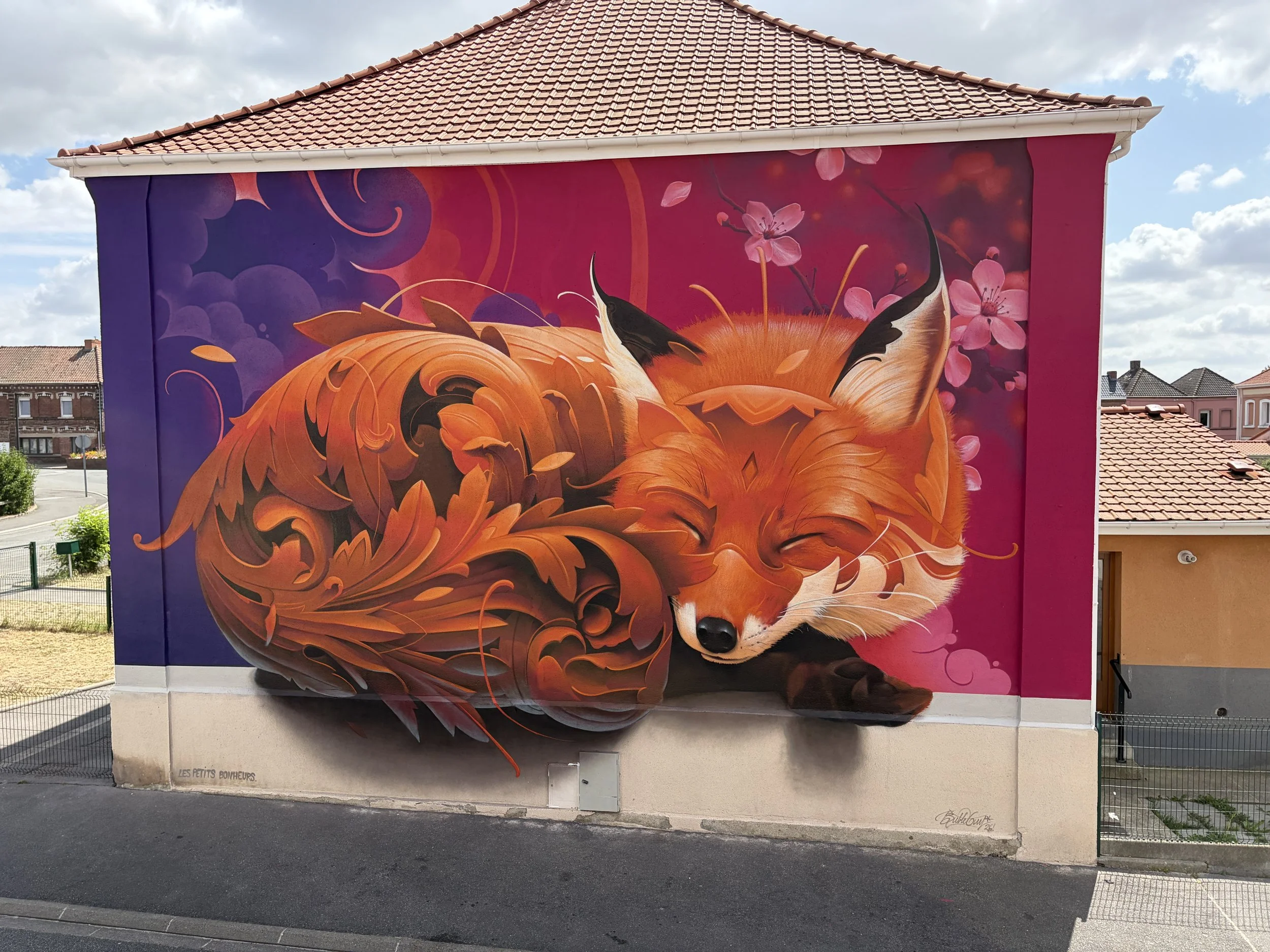
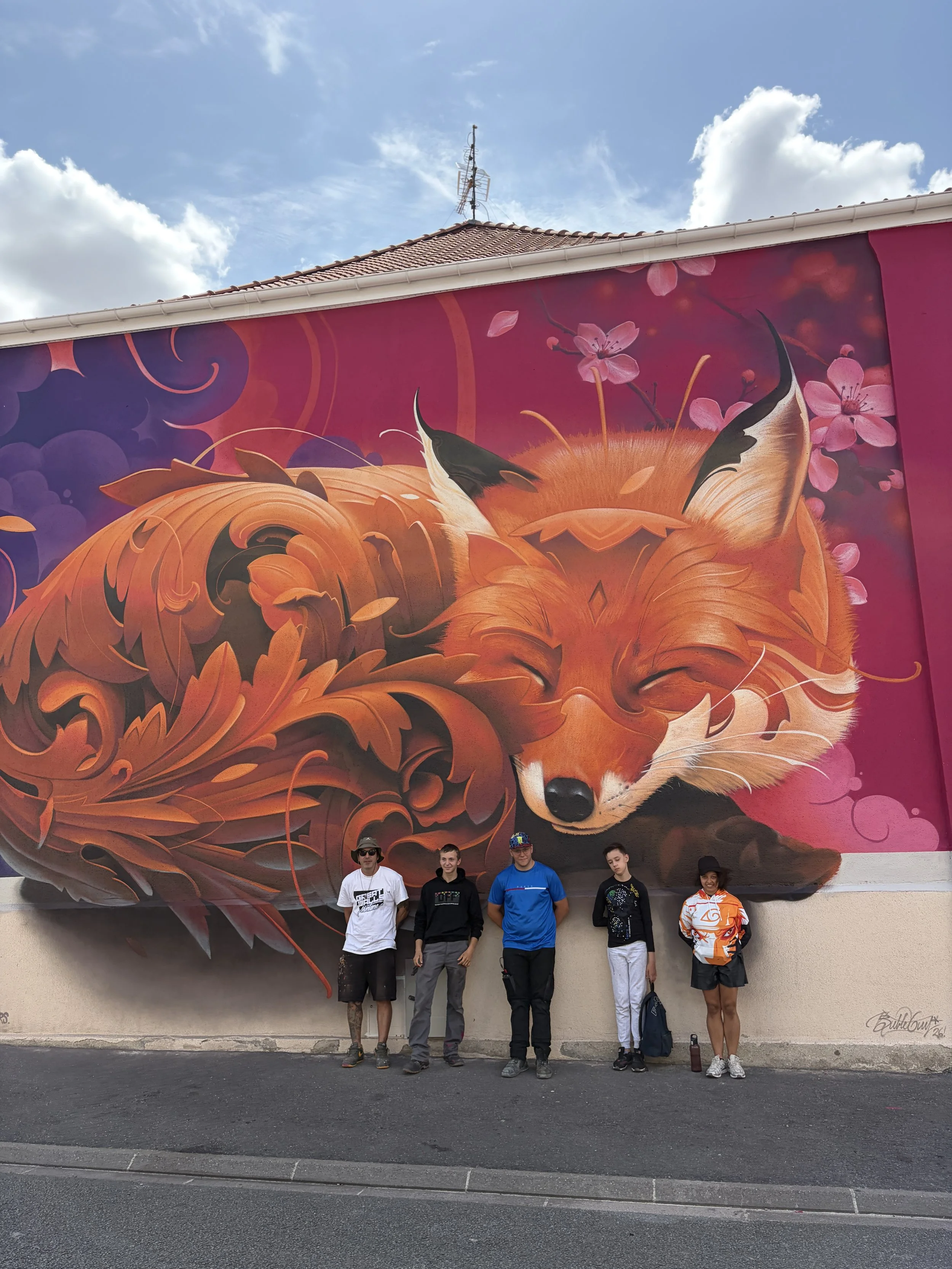
Some mural projects stay with you for reasons that go far beyond the finished artwork. Ornamental Fox, created in Béthune, France, was one of those projects.
The mural was developed as part of a community art initiative promoted by the City of Béthune, bringing together a group of young people with disabilities and their teachers. Over the course of the project, I had the opportunity to work directly alongside them, from the first ideas and choosing the protagonist of the mural to actually painting it together.
What started as a mural project quickly became a shared creative experience.
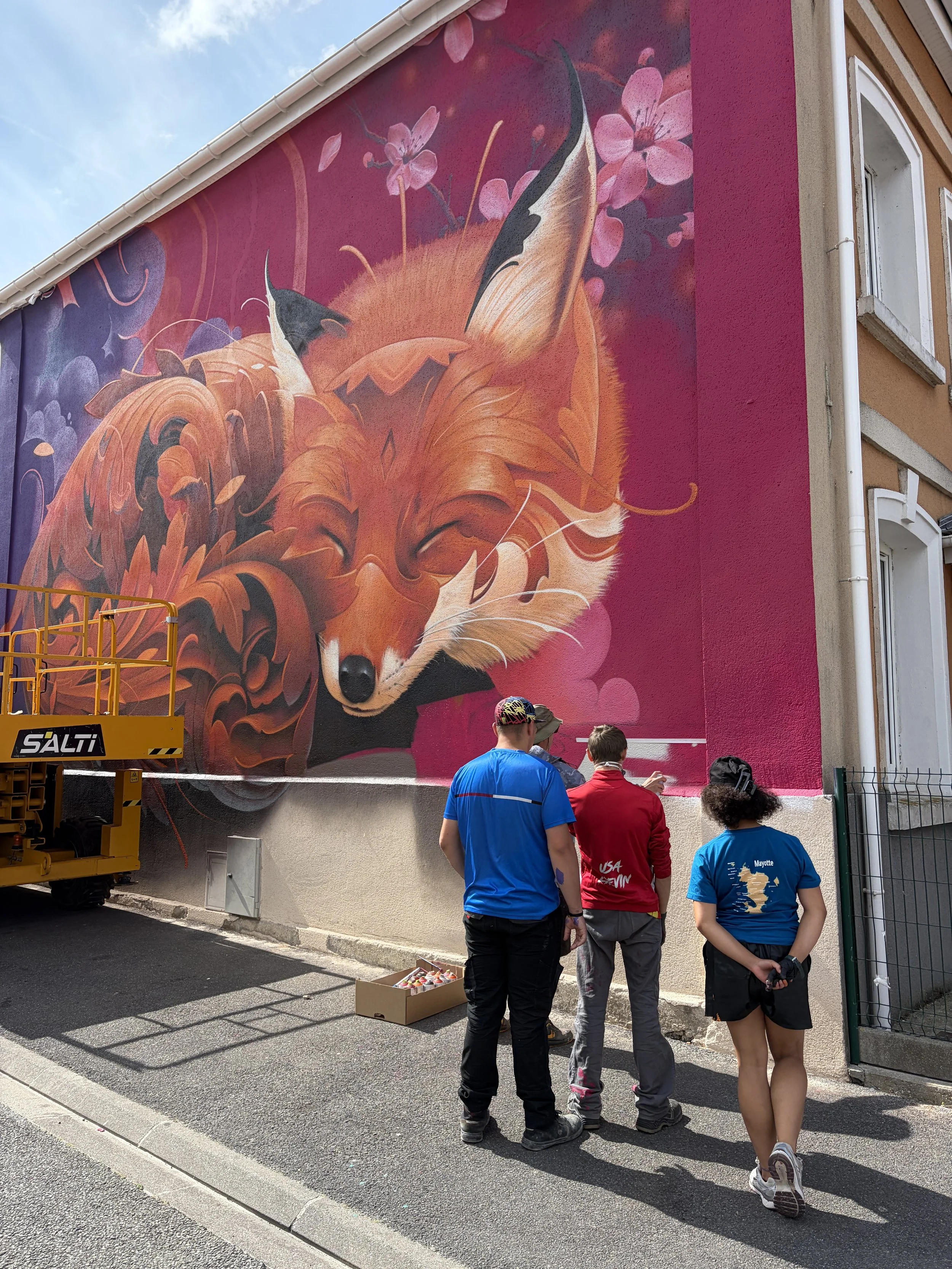
The group was made up of around five to seven young people, supported by three teachers who supervised the sessions throughout the project.
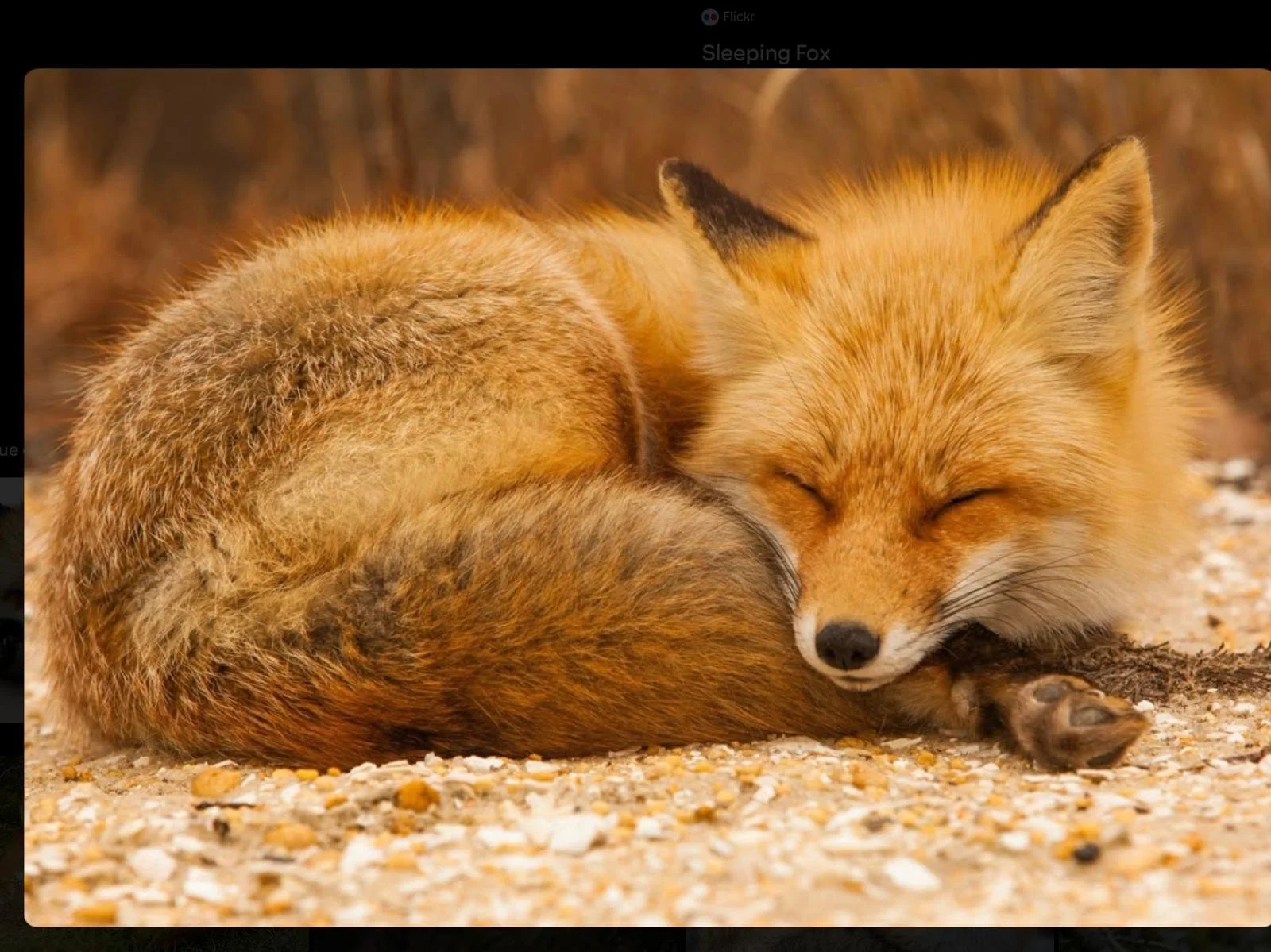
From the beginning, I wanted the concept to be something they could connect with. Rather than arriving with a finished idea, we started by discussing what kind of animal could become the main character of the mural.
The fox became the natural choice. It is an animal that can be found in the surrounding area, but more importantly, it was an animal the group liked and connected with.
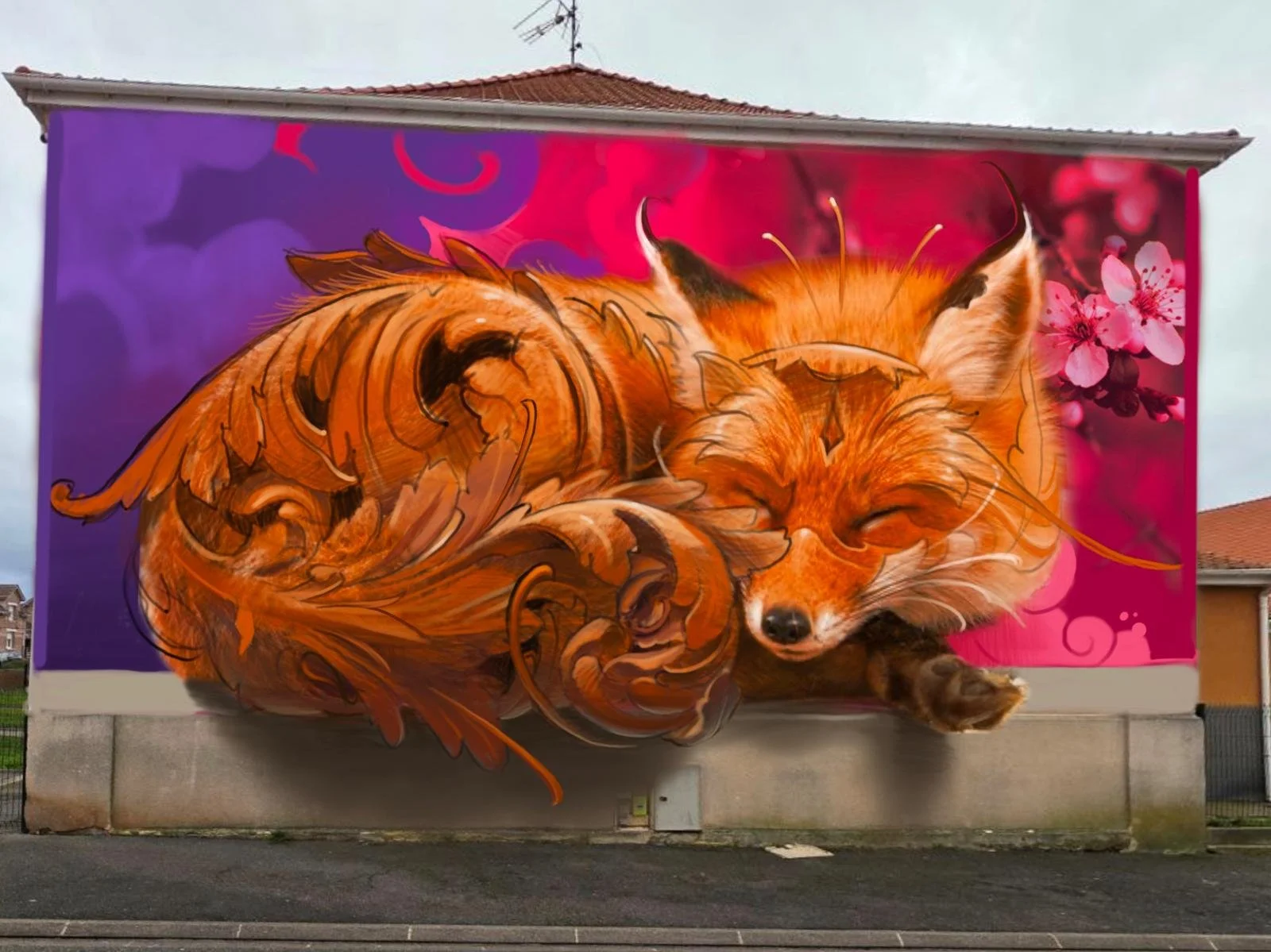
Once we had our protagonist, I developed the idea of portraying the fox in a dreamlike environment, surrounded by flowers and clouds. I wanted the final image to have a sense of fantasy and calm, incorporating elements inspired by tattoo art and my Ornamental Style.
But the concept was only the beginning. The most interesting part was seeing how everyone approached the wall differently.
Different Personalities, One Wall
One of the things I enjoyed most throughout the process was observing the different personalities within the group.
Some were immediately curious and wanted to get involved with everything. Others were more cautious at first and preferred to watch before taking part. Some were focused and methodical, while others approached the painting almost as a game.
It was fascinating to see how each person found their own way of interacting with the mural.
We started with something simple and accessible: painting with rollers and brushes. This allowed everyone to become comfortable with the wall, the scale of the project, and the idea of working together.
At one point, I gave them a small introduction to spray paint, explaining how different cans, pressures, and spray caps can create completely different effects.
We looked at the different types of sprays and caps and, most importantly, they were able to experiment with them themselves.
The reaction was great.
Some of the kids absolutely loved it. You could see how quickly the spray became something exciting and new for them a completely different way of painting compared to brushes and rollers.
For me, these moments are one of the best parts of working on community murals. You are not simply showing someone how to paint; you are giving them the opportunity to discover a new tool and see what they can create with it.
And they were not afraid of the heights either. As the mural progressed, some of the participants bravely climbed up to work on different parts of the wall. Watching them become more confident as the project developed was incredibly rewarding.
More Than Just Painting a Mural
This is what I love most about community and inclusive art projects.
You leave with something more than a mural.
Of course, there is a finished artwork on the wall, but there is also everything that happened around it: the conversations, the laughs, the discoveries, the moments of concentration, and the small victories that happen during the process.
On the day of the inauguration, I had the opportunity to meet and spend time with the participants' families. Even though there was sometimes a language barrier, it didn't really matter.
Art has a strange ability to remove those barriers.
You don't necessarily need to speak the same language to understand the excitement of seeing your work on a wall, to share a smile, or to celebrate something you have created together.
The Therapeutic Power of Art
Projects like this often remind me that art can be much more than something visual.
Painting can be a way of communicating, concentrating, experimenting, expressing yourself, and simply enjoying the moment. In many situations, the creative process itself can be therapeutic.
I think that's one of the reasons these projects are so meaningful to me.
I started painting walls when I was 16. Looking back, I often think about the people and artists who inspired me to pick up a spray can and start creating.
So sometimes I wonder whether, years from now, one of these kids might remember this project and think:
"Maybe I want to paint too."
If something like that happens, even for just one person, I would feel incredibly grateful.
Because ultimately, a mural is not only about what you leave on the wall. It is also about what you leave in the people who helped create it.