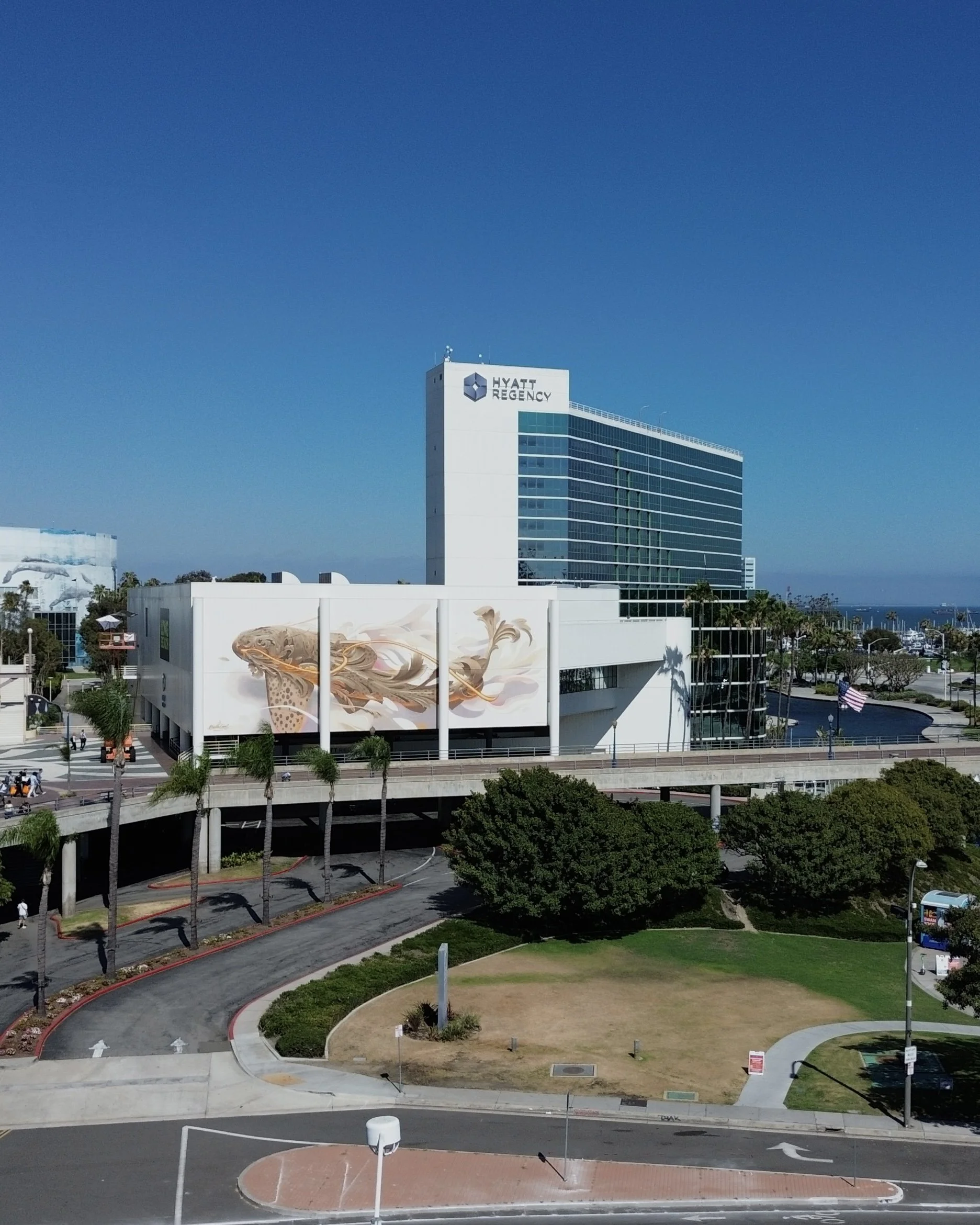
Behind the Mural: Ornamental Leopard Shark
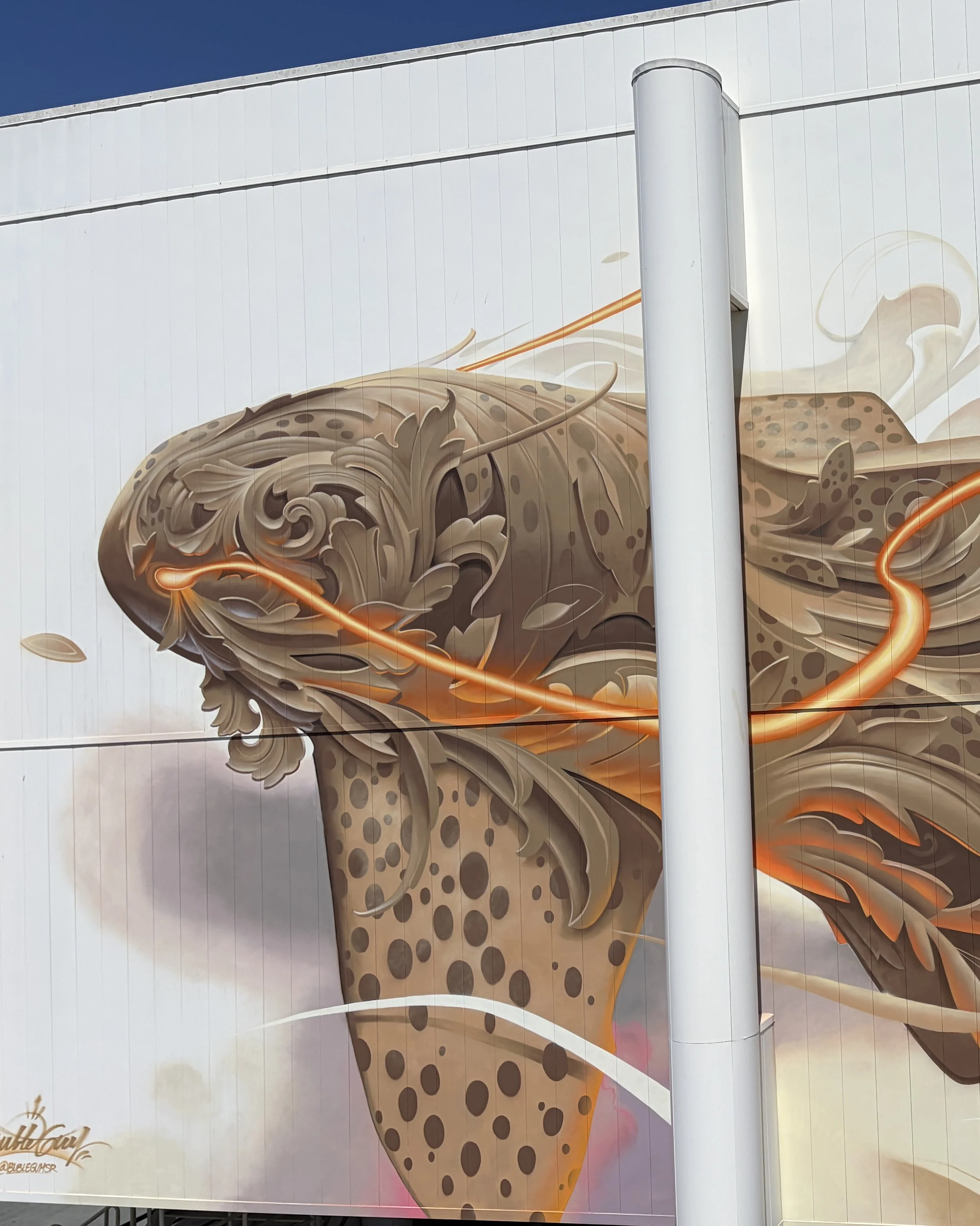
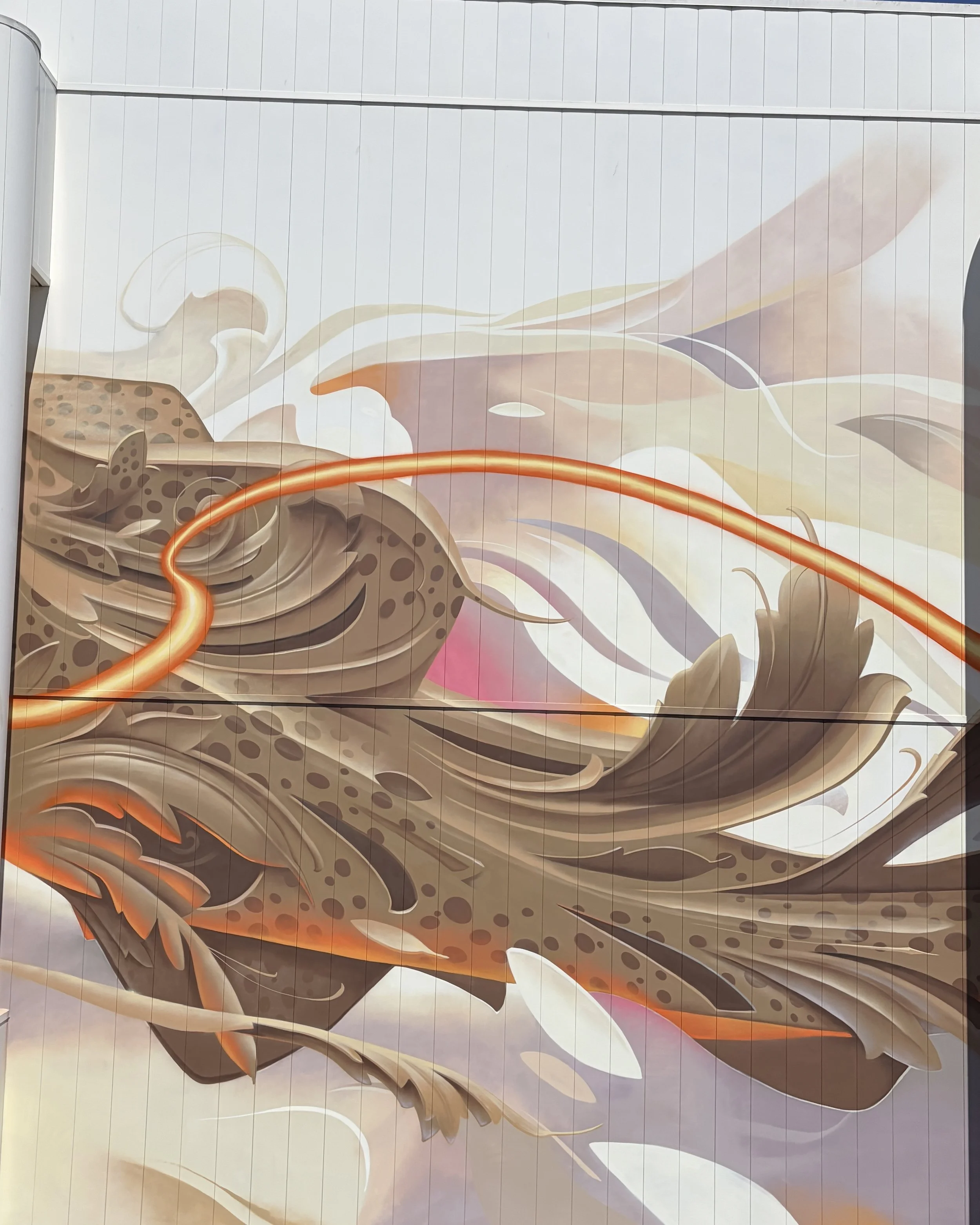
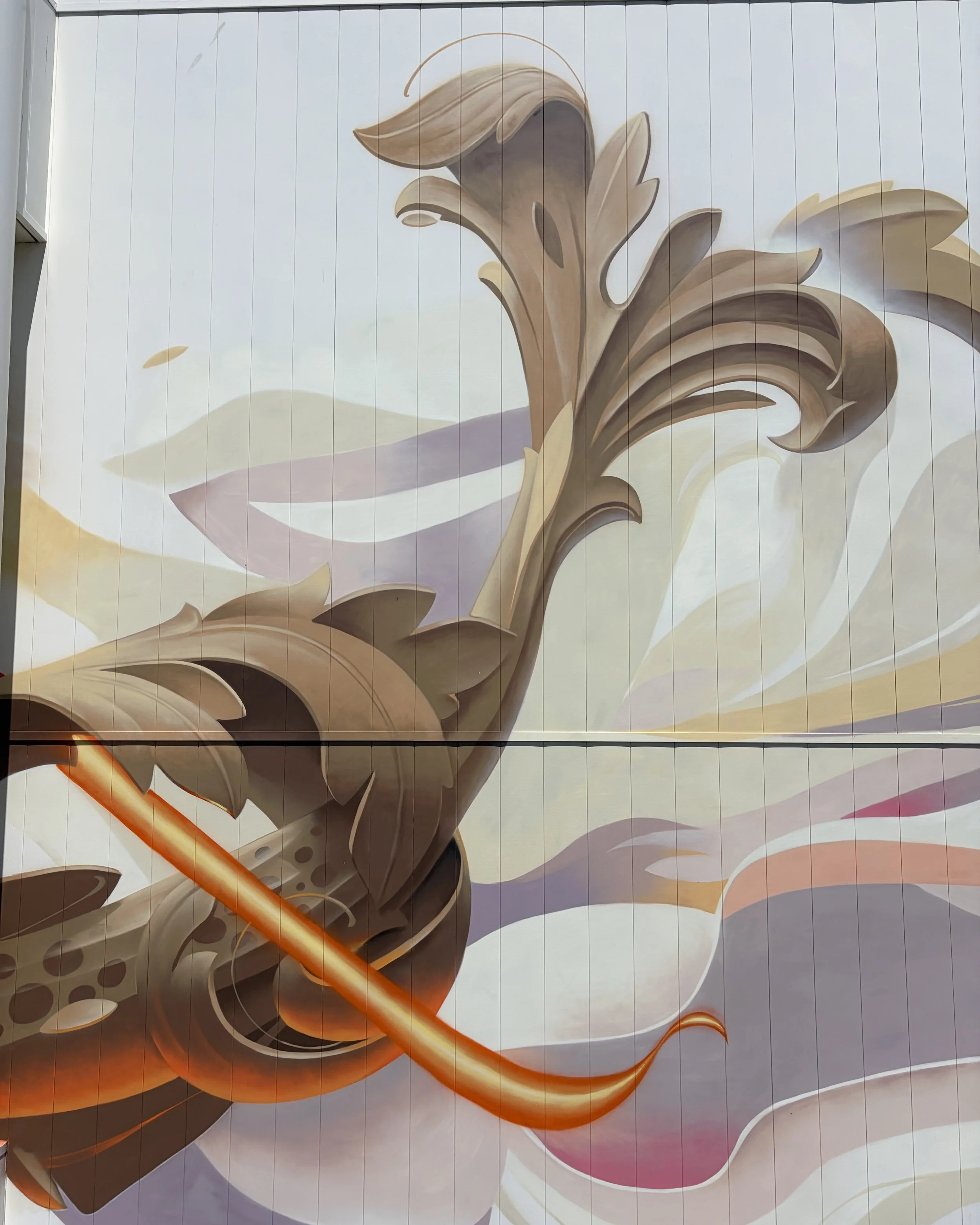
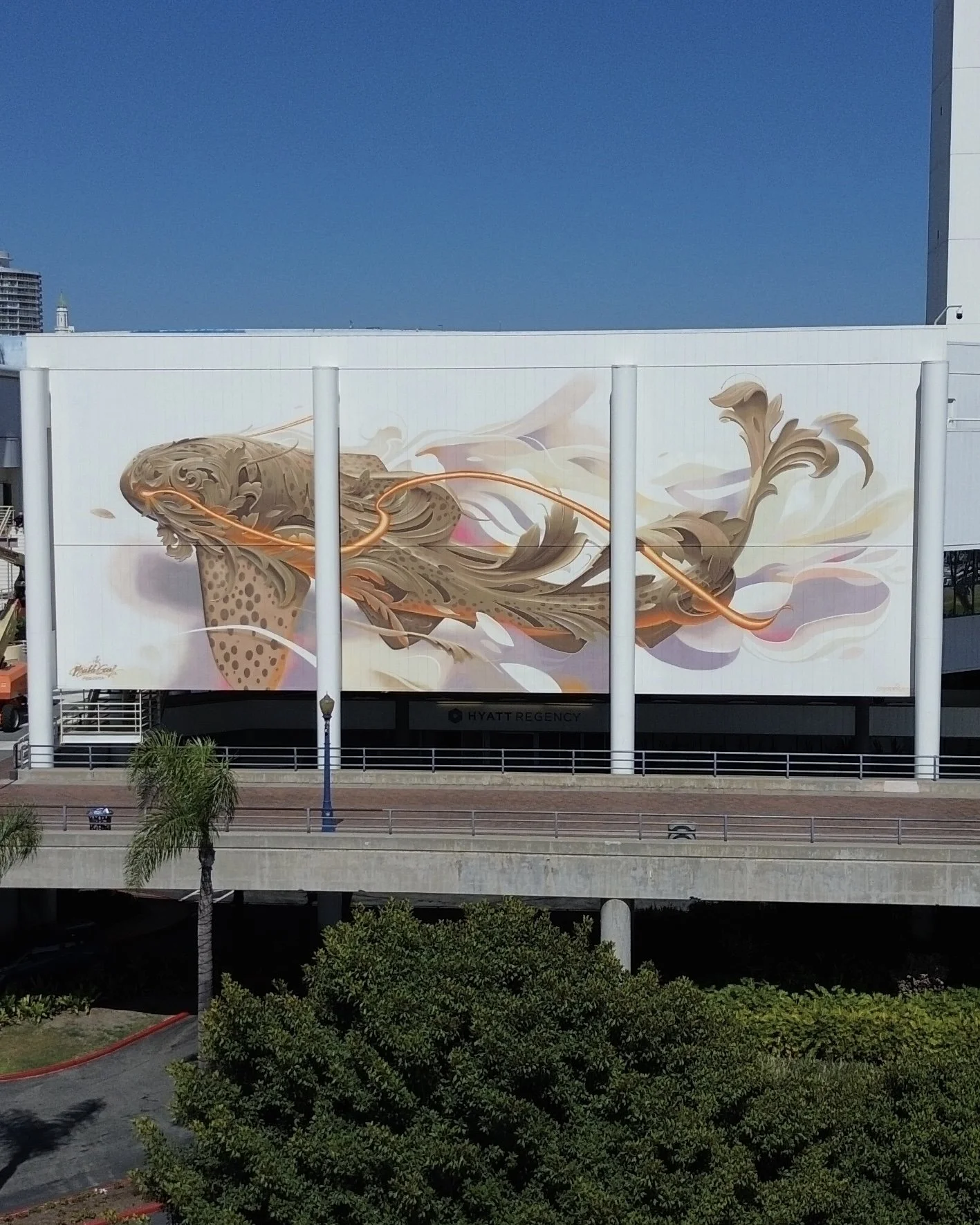
Urban art has the unique power to transform concrete into a living canvas, but, above all, it has the ability to become a loudspeaker. Recently, I had the opportunity to cross the Atlantic for a nearly month-long stay in the United States, an intense journey of inspiration and hard work that culminated in a very special project in California. Today, I want to share the story behind my latest large-scale mural: "Ornamental Leopard Shark", painted for this edition of the prestigious Long Beach Walls festival (in collaboration with Worldwide Walls and Creative Class LB).
It took approximately 10 days of intense work on the imposing facade of the Hyatt Regency Long Beach hotel. Ten days surrounded by the ocean breeze, California warmth, and a great community.
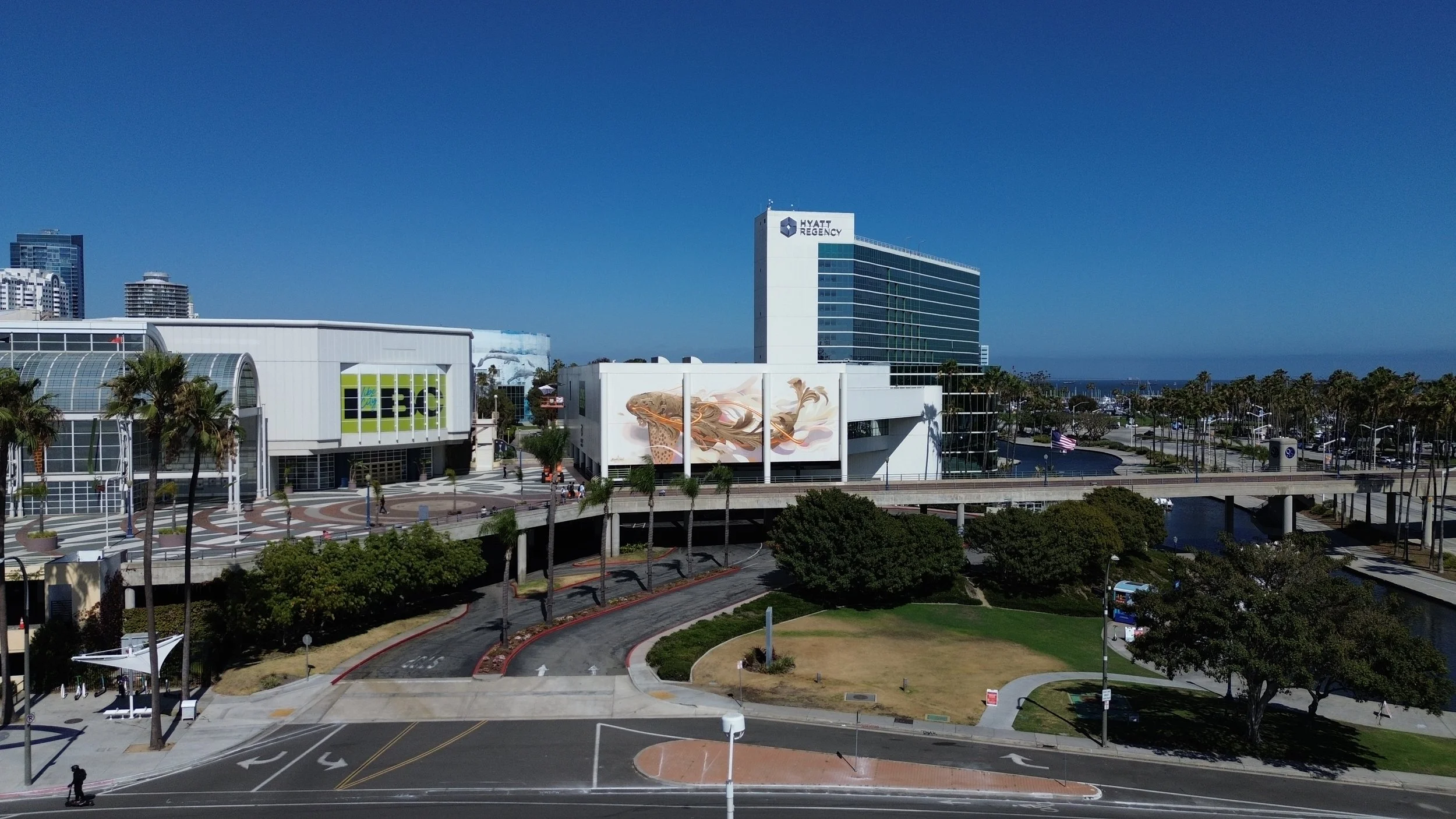
The Inspiration
For a city like Long Beach, whose identity, history, and daily life are so deeply tied to the ocean, I knew I wanted to paint something that connected directly with the marine ecosystem. I have always felt a special fascination for the sea and for those species that are often forgotten, eclipsed by more common animals.
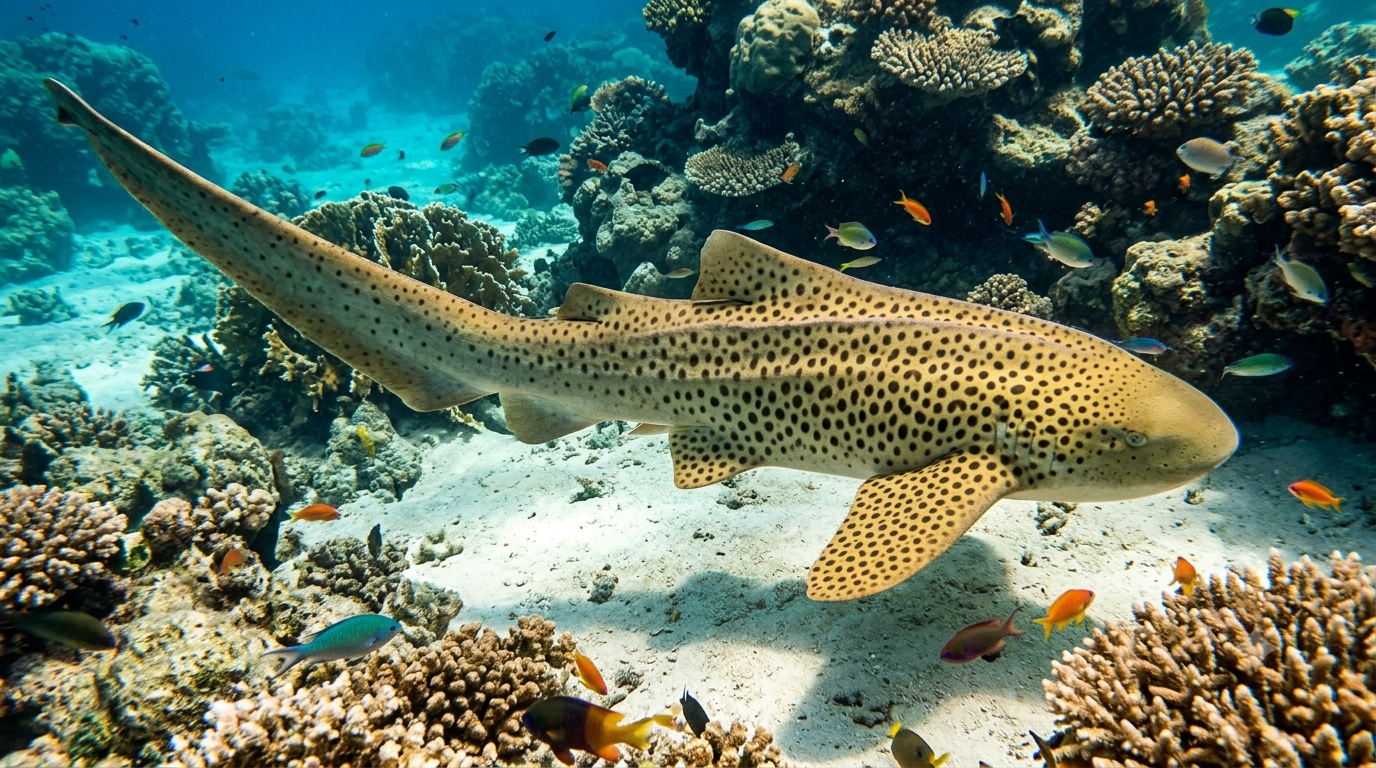
The zebra shark (Stegostoma tigrinum), frequently called the leopard shark due to the beautiful pattern of dark spots covering its body as an adult, is one of those truly fascinating creatures. Contrary to the aggressive image that cinema has projected onto sharks, the zebra shark is a peaceful, elegant animal of striking visual beauty. Its organic shapes, elongated tail, and majestic swim fit perfectly with the fluidity I always strive to capture in my work.

Painting this species was not a purely aesthetic decision; it was a choice with a clear purpose: to bring visibility to what goes unseen.
Behind the beauty of this gentle giant lies a heartbreaking reality. The zebra shark is currently listed as an endangered species in its natural habitat. Its global population is decreasing at an alarming rate year after year, making it an animal that is increasingly difficult to spot in the wild.
The causes? The usual ones, and all driven by human activity:
Overfishing: Captured both through targeted fishing and accidentally as bycatch in trawl nets.
The destruction of coral reefs: Climate change, pollution, and ocean acidification are destroying the ecosystems where these sharks live, feed, and reproduce.
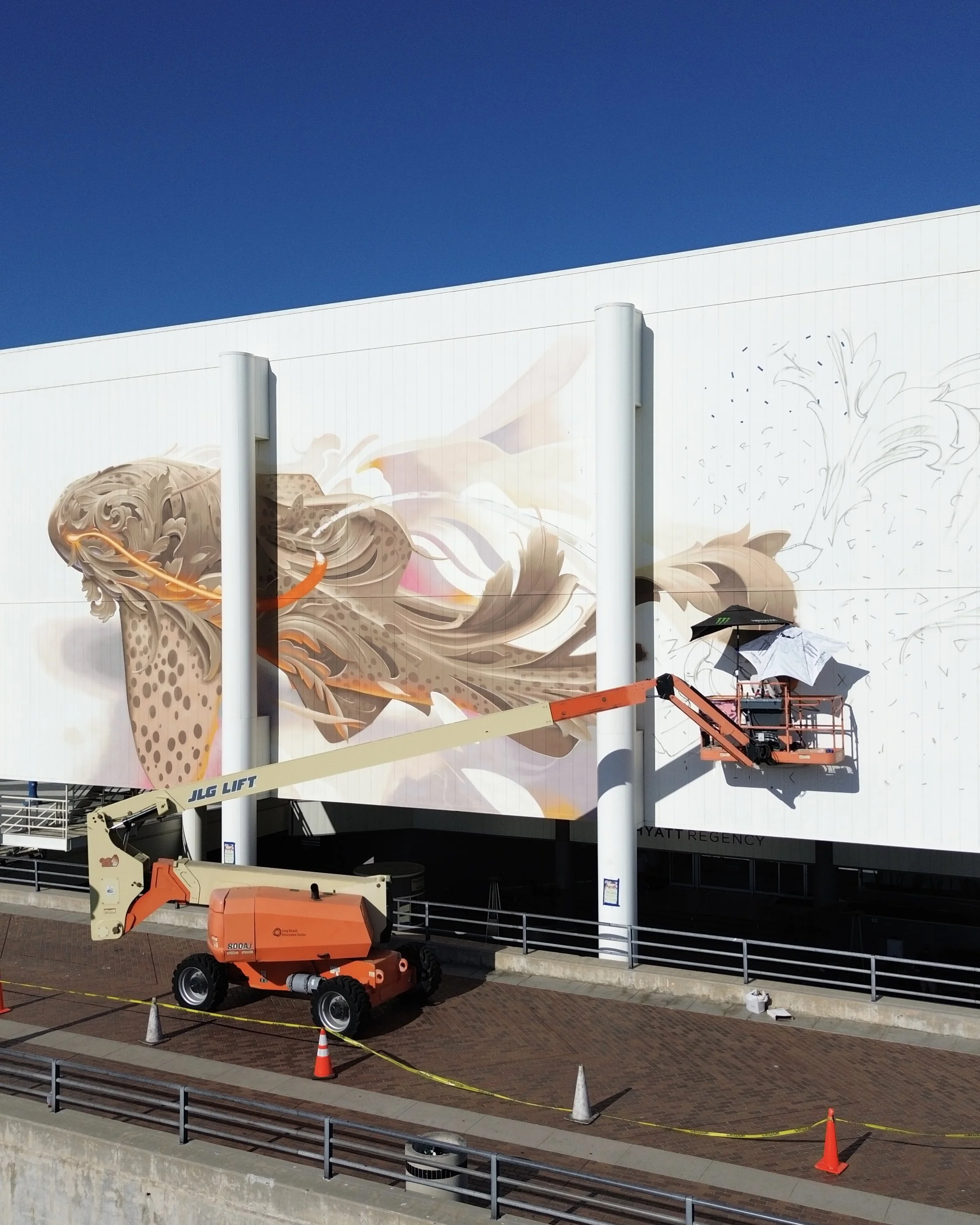
Watching the design come to life on the facade of the Hyatt Regency made me constantly reflect on the urgency of this message. We cannot continue to live with our backs turned to the sea. Taking care of our planet is not a trendy slogan or a superficial choice; it is an immediate biological necessity. The oceans regulate the Earth's climate and produce most of the oxygen we breathe. Every time a marine species goes extinct due to human negligence, we lose an irreplaceable piece of the engine that keeps us alive.
With this mural, I wanted to immortalize the leopard shark as a powerful, elegant, and majestic figure, a permanent monument reminding every passerby that the ocean's beauty is as immense as it is fragile, and that protecting it is in our hands.
I am deeply grateful to @longbeachwalls_artrenzei, @worldwidewalls.art and @creativeclass_lb for trusting my vision and giving me total freedom to bring this ecological message to one of their most iconic walls.
The mural is now finished and belongs to the streets of Long Beach. I hope that the next time you pass by the Hyatt Regency and come across the gaze of this leopard shark, you take a moment, enjoy its forms, and remember that the future of our oceans also depends on the choices we make here on land.